Sheet Resistance Measurement Systems

Sheet Resistance Measurement Systems
Sheet resistance monitoring is critical to any industry that utilizes conductive films, from semiconductor manufacturing to the flexible electronics required to enable wearable technology. The Filmetrics® R-series sheet resistance measurement instruments have been developed based on over 45 years of KLA innovation. Since the introduction of our first resistivity gauge in 1975, we have revolutionized both sheet resistance measurement and thickness measurement for conductive layers. The R50 4PP and the non-contact eddy current system measure metal layer thickness, sheet resistance and sheet conductance. The R54 4PP non-contact measuring instruments–the latest innovation in KLA sheet resistance and conductivity mapping systems–adds a light-tight enclosure along with 300mm support, to provide metal thickness measurement solutions for semiconductor and compound semiconductor manufacturing.
Products

Filmetrics® R50-4PP Four-Point Probe System and Filmetrics R50-EC Eddy Current System
The Filmetrics R50-4PP contact four-point probe systems and Filmetrics R50-EC non-contact eddy current systems map metal layer thickness, sheet resistance, sheet resistivity, sheet conductance, and sheet conductivity.
A large Z range makes the R50-4PP ideal for a wide variety of applications. The R50-EC system is ideal for measuring resistance and film thickness on sensitive and/or flexible conductive surfaces.
Filmetrics® R54-200 and Filmetrics R54-300 Sheet Resistance Mapping Systems
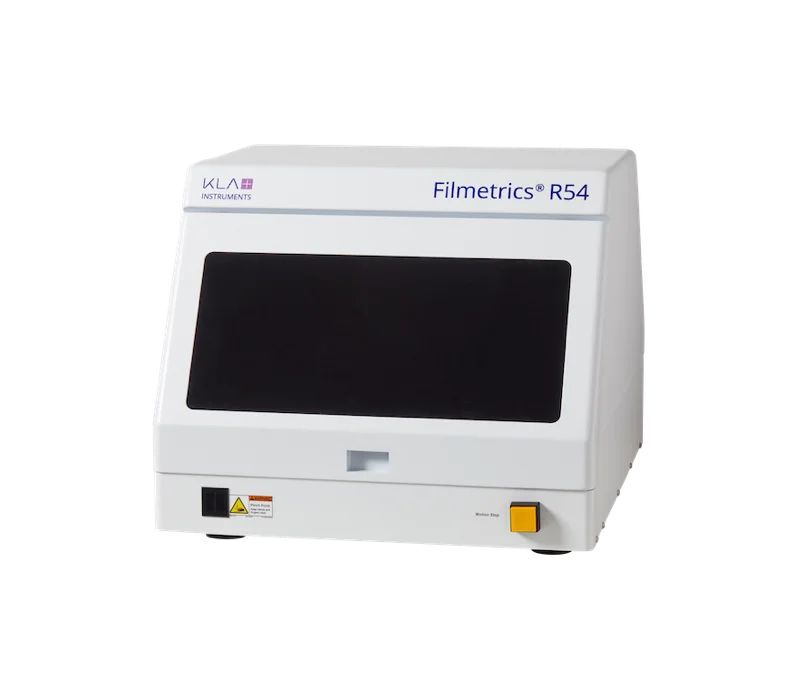
The Filmetrics R54 advanced sheet resistance and sheet conductivity mapping systems deliver R50 performance capability within a light-tight enclosure with additional capability to support semiconductor and compound semiconductor applications, including implant and epitaxial wafers.
The two R54 systems, accommodating up to 200mm and 300mm sample options, can be configured as either direct four-point probe (R54-4PP) or non-contact eddy current systems (R54-EC).
Frequently Asked Questions
-
What is sheet resistance?
Sheet resistance is the resistance of a thin film to current flowing laterally across its surface. It is measured in ohms per square (Ω/sq) and describes how easily current flows across a uniform conductive layer. It is commonly used to characterize films of uniform thickness.
-
How is sheet resistance measured?
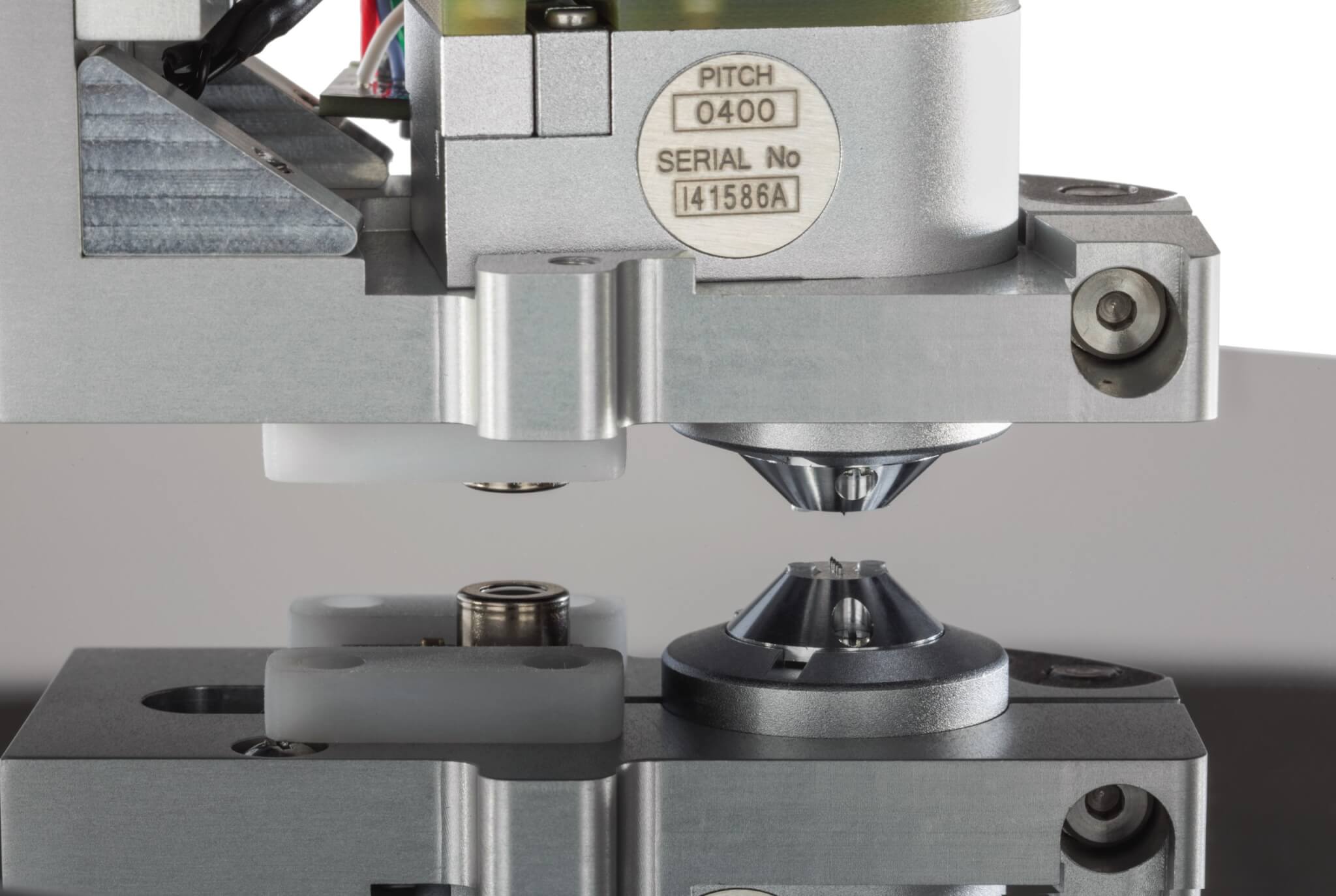
The most common method is the four-point probe (4PP). 4PP provides a simple and direct measurement of resistance, where a probe consisting of four conductive pins contacts a conductive surface with a controlled force. The standard pin configuration applies a current across the two outside pins and measures the voltage across the two inside pins.
- Four-point probe (4PP): KLA pioneered the R54 dual configuration technique that measures the voltage on alternate pins, applying dynamic correction for edge effects.
-
Eddy current (EC): Non-contact methods may also be used for certain applications, and KLA offers a non-contact eddy current (EC) technique. EC provides a non-contact, mutual induction technique for measuring conductive films. A time-varying current is applied through a coil to produce a time-varying magnetic field that, when brought close to a conductive surface, induces time-varying (eddy) currents in that surface. These eddy currents in turn create their own time-varying magnetic field that couples with the probe coil to create a signal change that is proportional to the sheet resistance of the sample.
KLA’s EC solution uses a top side probe that is unaffected by surface oxidation and is ideal for samples that are not well suited to the 4PP contact method, such as SiC and compound semiconductors.
-
Why is sheet resistance important?
Most electronic devices rely on the flow of electrical current through conductive materials. Quantifying the amount and uniformity of conducting and semiconducting films is critical for optimizing device performance.
-
What is the difference between sheet resistance and resistivity?
Sheet resistance applies to thin films and is measured in Ω/sq. Resistivity is a bulk material property measured in Ω·cm or Ω·m and requires film thickness to calculate from sheet resistance.
-
What factors affect sheet resistance accuracy?
Accuracy can be influenced by film uniformity, probe spacing, sample thickness, edge effects, temperature, surface contamination, probe pressure, and calibration quality.
-
Are measurements destructive?
Four-point probe measurements are generally considered minimally invasive, but probe contact can leave small marks, especially on softer surface or very thin films. Non-contact eddy current (EC) systems are used when contact must be avoided.
-
What materials are commonly measured with sheet resistance?
- Semiconductor wafer layers
- Metal films
- Transparent conductive oxides
- Doped silicon layers
- Thin-film photovoltaics
- Display materials
-
Why use a four-point probe instead of a two-point probe?
A four-point probe minimizes the impact of contact resistance, probe resistance, and lead resistance, making it more accurate for thin-film measurements.
-
What is sheet resistance uniformity?
Uniformity describes how consistent the sheet resistance is across a wafer, substrate, or film. It is often reported as a percentage variation.
-
Can sheet resistance mapping be performed across a wafer or panel?
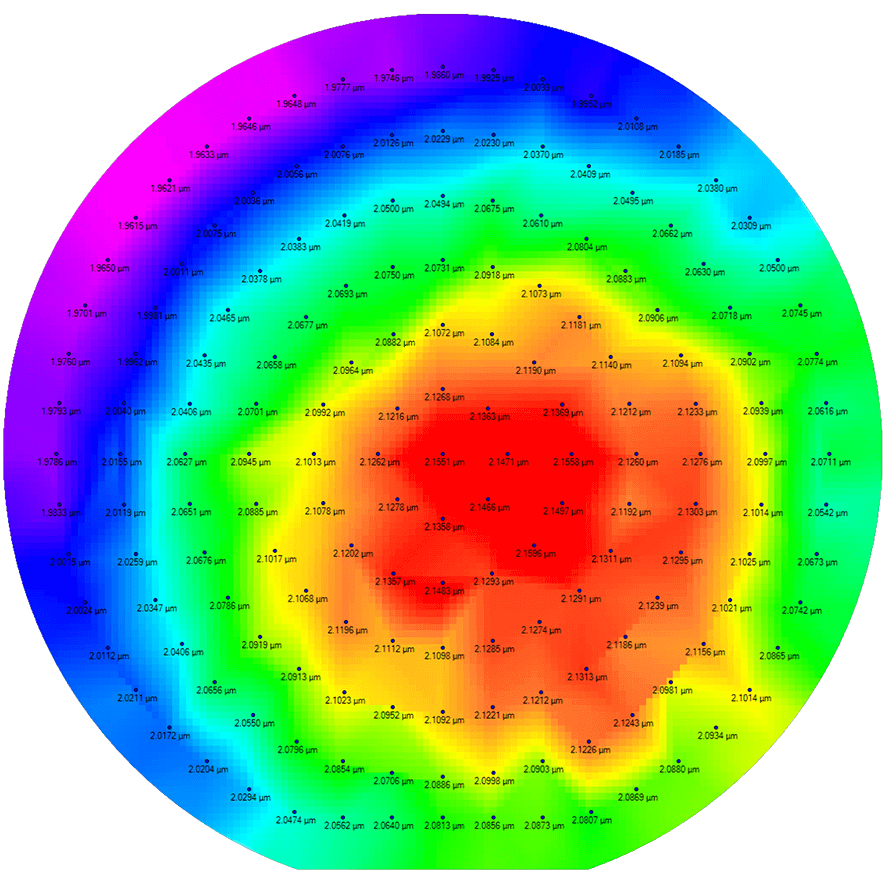
Yes. Automated systems can measure multiple locations to create uniformity maps and identify process variation. All KLA sheet resistance measurement systems include mapping capability.
-
What should I consider when selecting a system?
Key considerations include:
- Measurement range
- Sample size
- Automation requirements
- Mapping capability
- Contact vs. non-contact measurement
- Throughput
- Repeatability
- Software analysis tools
- Integration with production workflows
The Filmetrics® R50 is an entry-level system that provides resistance uniformity mapping, and the R50-200 supports wafer sizes up to 200mm diameter.
The R54-200 supports wafer sizes up to 200mm diameter and includes a light-tight enclosure. The R54-300 supports wafer sizes up to 300mm diameter.
-
Do sheet resistance measurements require calibration?
Yes. Calibration using reference standards is important to maintain accuracy and repeatability.
-
What industries use sheet resistance measurement systems?
- Semiconductor manufacturing
- Photonic devices
- Solar cell production
- Flat panel displays
- LED manufacturing
- Research labs
- Thin-film coatings
-
How do I get started?
Fill out this inquiry form to get the process started, and one of our applications or sales representatives will contact you to discuss your application requirements and answer any initial questions on pricing and lead times. A quote can be sent to you at this time, or you may wish to schedule a demo, either in-person or by sending samples for measurement. If a demo is completed, the report will be generated for you, after which you can decide how you would like to move forward.
-
What happens once I place an order?
Once an order is placed, your salesperson will keep you informed of the delivery schedule. To order new or replacement probes, contact your sales representative. For questions that may arise as you are using the tool, our global Applications Team can provide assistance.
Looking for OmniMap® RS-200 sheet resistance measurement tools for high-volume semiconductor chip manufacturing?
View MoreTechnical Literature
Browse application notes and technical papers from KLA Instruments Application Engineers and customers, covering a variety of use cases for KLA Instruments products.
Timeline of Innovation
Our history of innovation and deep expertise have built a broad portfolio of measurement and inspection solutions that address every requirement and environment. See how it all started from the inception of the Alpha-Step® product line in 1977 through our latest product innovations.

Receive the latest KLA Instruments news, papers, events, and more
Follow KLA Instruments
Follow KLA Instruments to engage with our experts and learn about our tool applications.
Learn how our products can help you.
Explore More Solutions

Instruments
For industry experts, academics and other innovators, KLA Instruments delivers trusted metrology and defect inspection solutions that provide measurements that enable the world’s breakthrough technologies.

Automated Metrology
KLA Instruments automated metrology instruments enable fab process control to quantify electrical properties, material deposited/removed, surface topography/roughness and critical dimensions. Automated metrology options include optical profilometry, stylus profilometry and film thickness mapping.
Filmetrics® Thin-Film Thickness Measurement Systems
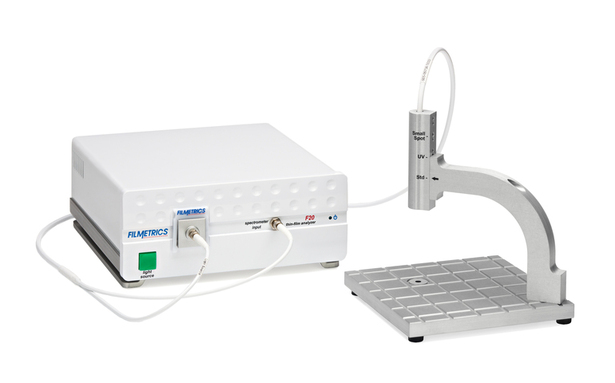
The Filmetrics® thin-film reflectometers provide thickness and refractive index measurements of transparent films in seconds. These non-contact measuring instruments are available for both benchtop and production environments.
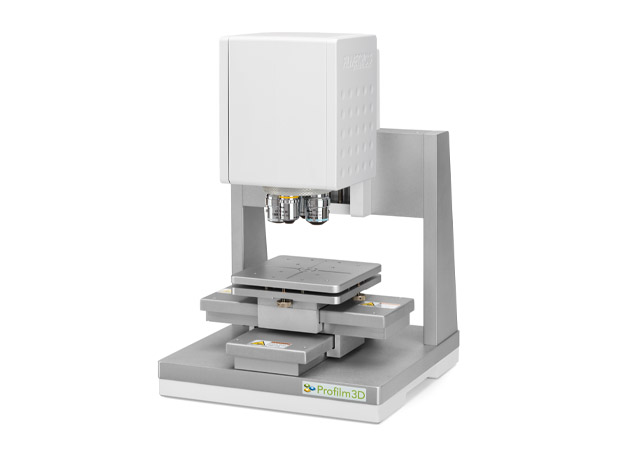
Filmetrics® and Zeta™ Optical Profilers
The Filmetrics® Profilm3D® and Zeta™ optical profilometers offer fast, non-contact measuring instruments for 3D step height, roughness, and other surface topography measurements, leveraging interferometer and ZDot™ measurement techniques for R&D and production environments.
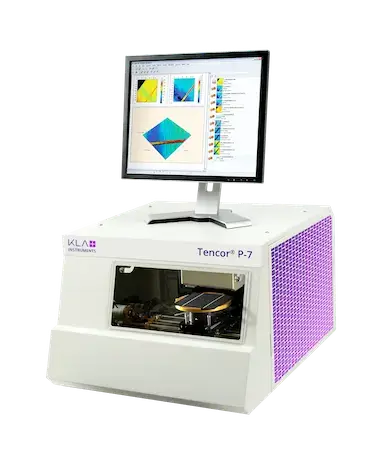
Stylus Profilers
The Alpha-Step®, Tencor® P-series and HRP® stylus profilometers enable high-precision, 2D and 3D surface metrology. The stylus profilers measure step height, roughness, bow and stress with industry-leading stability and reliability for your R&D and production metrology requirements.
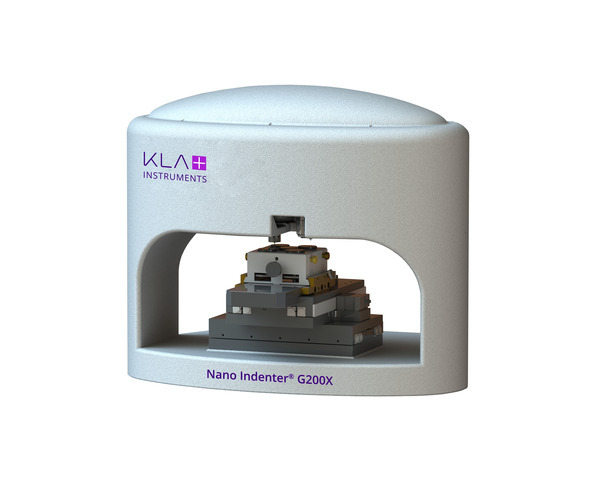
Nanoindenters
The KLA Instruments nanoindenter portfolio provides precise, reliable and repeatable nanoindentation and hardness testing to characterize static and dynamic mechanical properties of materials, under a wide range of test conditions.